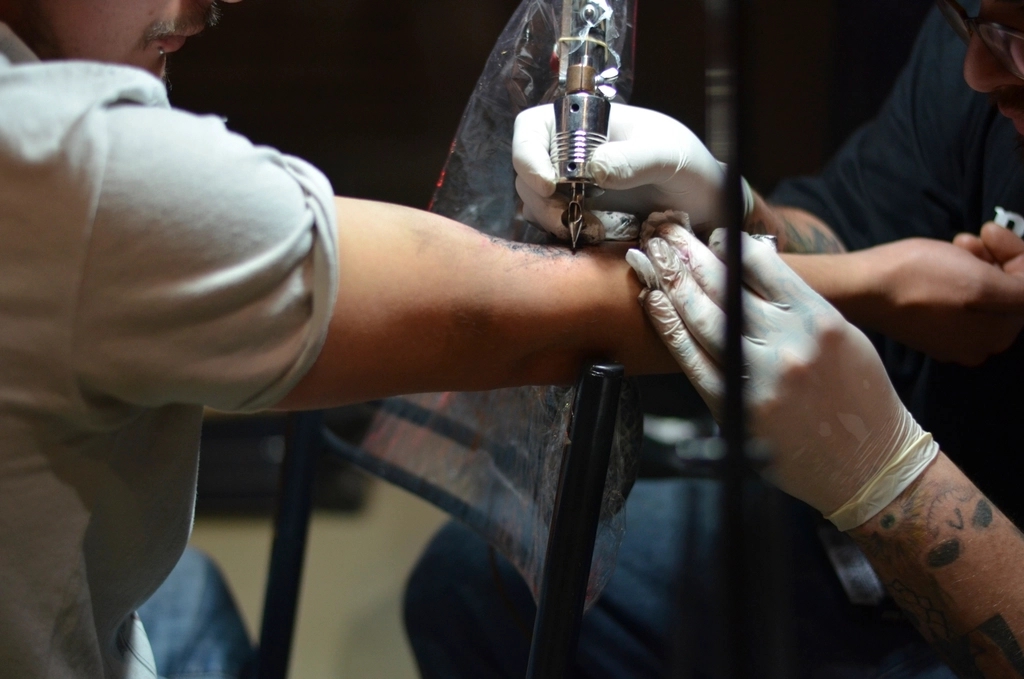
A collective sigh of relief echoed throughout tattoo studios across the US this week, when a Los Angeles federal court ruled that tattoo artist Kat Von D did not violate a photographer’s copyright when she used his portrait of Miles Davis as the basis for a tattoo she’d inked on a friend’s arm. The jury took just over two hours to unanimously rule that Von D did not infringe on photographer Jeff Sedlik’s copyright.
The case had the potential to cause havoc in the tattoo industry, where it’s standard practice for artists to use photographs as reference without asking for permission or a license beforehand. It is generally believed to fall under the concept of ‘fair use’ of copyrighted material, which allows for certain unlicensed uses of works that are protected by copyright.
US courts have established a number of criteria for what constitutes fair use, including the purpose for which it is used; whether the use of a copyrighted work is “transformative” (does it add something new, with a further purpose or different character); how much of the original work is used; and what impact it may have on the commercial market for the original work (does the unlicensed use of the work harm the existing or future market for the copyright owner’s original work.) In the past, criticism, commentary, news reporting and teaching have all been found to fall under ‘fair use,’ as well as song parodies.
It is notable that Von D inked her friend free-of charge and that no money changed hands. The question arises as to whether the outcome would have been difficult had Von D been paid for the work in question. Although the plaintiff claimed that she benefitted financially through its use on social media, the argument may have held more sway if the payment had been more direct. Particularly in light of last year’s Supreme Court ruling in Andy Warhol v Goldsmith, where it was found that that the licensing of an image Andy Warhol created of musician Prince based on a photograph by Lynn Goldsmith for use as a magazine cover was not fair use. The Court did not favour fair use because Warhol’s work, when used as a magazine cover, shared the same commercial purpose as the original photograph of Prince. However, the majority did not expand on the definition nor opine on the creation of the work or other potential uses of it such as the public display of Warhol’s works in a museum. The ruling noted that “the same copying may be fair when used for one purpose but not another,” thus providing little additional clarity on what is or isn’t fair use.
There are “absolutely” grounds for appeal, according to Sedlik’s lawyer, Robert Allen, adding that it was a ‘hurried decision that does not reflect the facts.’ We look forward to the next installment!



 Wigs And Gowns
Leave a comment